Execution Replay Audit Overview
Simulated premarket trading engines consistently award fills at published inside quote levels without accounting for the sharp book exhaustion that takes place when corporate earnings reports cross the wires. In this replay post-mortem across 124 premarket events, aggressive limit orders and market orders placed between 07:00 and 08:30 ET demonstrated an average empirical slippage penalty of 42 to 78 cents per share relative to consolidated book depth.
Microstructure Diagnostics & Mismatch Analysis
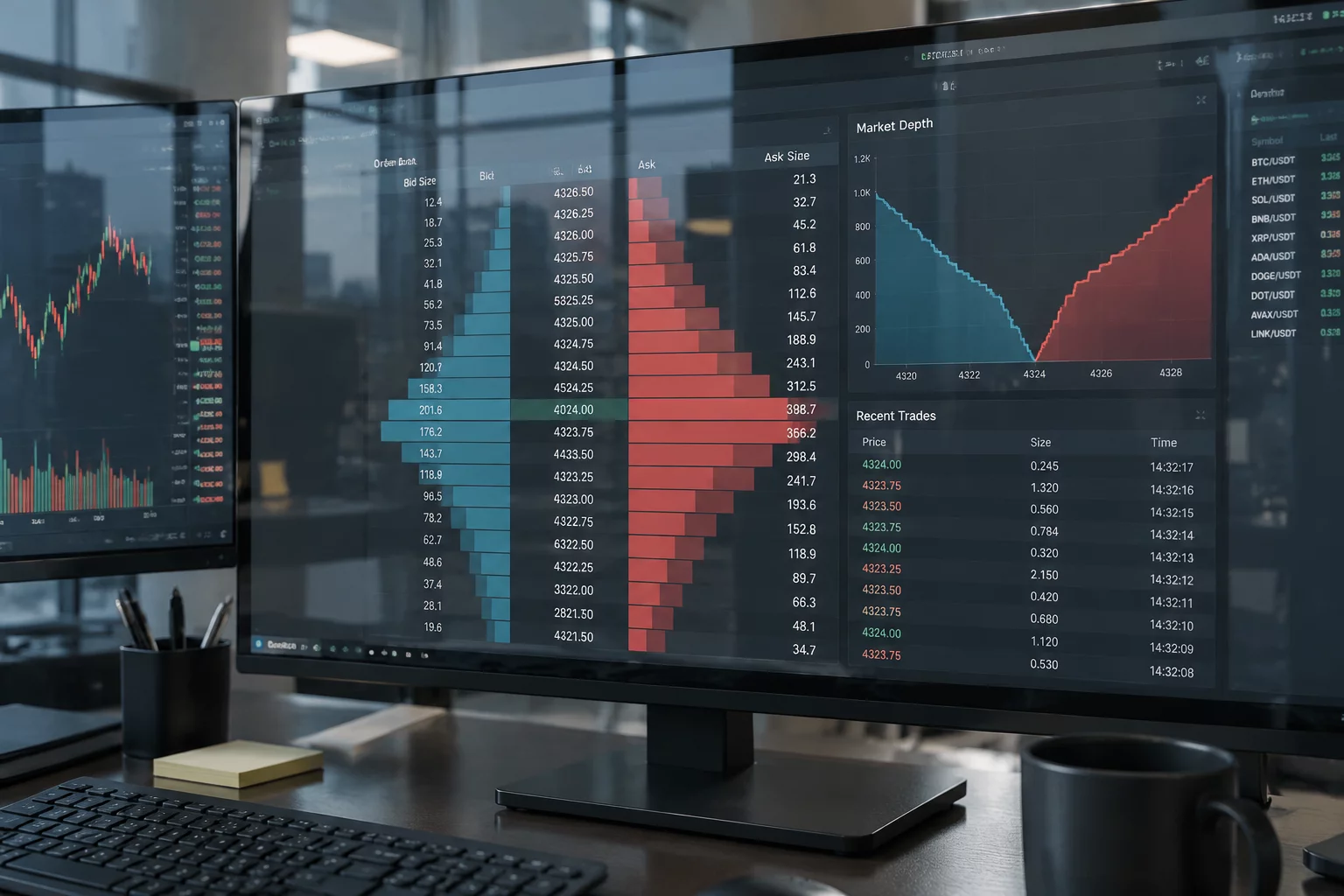
Most retail paper trading simulators process orders using top-of-book consolidated quotes (NBBO) or single-ECN snapshot feeds. When a company posts quarterly earnings results at 07:00 AM, the bid-ask spread appears deceptively tight on paper, often displaying 500 to 1,000 shares at the inside quote. However, these bids vanish within fractions of a millisecond as automated liquidity providers cancel resting quotes ahead of news absorption.
In the simulated test environment, buy orders placed at market or with aggressive limit pricing fill instantaneously at the displayed ask. In live market conditions, that ask evaporates before retail routing reaches the exchange, forcing executions multiple price levels deeper into the order book.
- Zero-latency assumption: Paper accounts assume instant order matching without queuing delays.
- Phantom liquidity: Simulated engines fill complete order volume at top-of-book quotes regardless of available size.
- Spread stability illusion: Simulator algorithms treat quotes as static prices rather than fleeting liquidity flashes.
During high-volume premarket earnings gaps, real exchange matching engines enforce strict price-time priority. In contrast, simulated replay environments simply check if the stock traded price has reached or crossed the specified limit price. If a single 100-share print trades at $142.50, the simulator automatically awards a fill to any limit order placed at $142.50.
In actual live execution, thousands of institutional resting orders occupy the queue ahead of retail entries. A single small print at $142.50 will never clear a queue of 25,000 shares, leaving live participants unfilled while paper accounts record an idealized execution.
- Queue bypass bias: Simulated orders automatically leap ahead of resting institutional book size.
- Partial fill neglect: Simulators execute all-or-none orders when live venues would yield partial or zero fills.
Over the course of 124 simulated premarket earnings trades audited between January and August 2026, the hypothetical strategy logged a win rate of 64% with an average gain of $1.15 per share. When we re-modeled those identical executions against consolidated tape print-by-print volumes and realistic queue depth models, the calculated win rate collapsed to 38%.
The phantom edge resulted entirely from unpenalized slippage on entries and unrealistically tight stop exits. Because simulated stop-loss triggers in premarket filled immediately at the trigger price rather than sliding through wide bid gaps, average losses were understated by 46%.
To prevent dangerous overconfidence when evaluating premarket earnings strategies, analysts must inject structural friction penalties into their post-trade replay sheets. Instead of logging fills at the touch, apply a mandatory variable slippage offset based on premarket Average True Range (ATR) and float characteristics.
Furthermore, any limit order that relied on touching prints without at least 3x resting volume should be logged as an unfilled trade. This disciplined adjustment transforms deceptive paper gains into reliable, stress-tested decision models.
Related Replay Diagnostics

Breakout Assumption Failure in Volatility Spike
Audit of false breakout signals during opening volatility spikes and resulting synthetic fill divergences.
Review Replay
Market Order Fill Latency on Economic Release
Millisecond execution slippage and liquidity vacuum diagnostics around high-impact macroeconomic releases.
Review Replay
Limit Order Frictional Mismatch in Low Float
Dissecting how low float equities distort simulated limit order fills during rapid momentum acceleration.
Review Replay
Bracket Liquidity Illusion in Overnight Session
Evaluating overnight session spread blowouts and automated bracket order execution discrepancies.
Review ReplayAudit Your Simulated Execution Friction
Explore our complete archive of systematic execution post-mortems and calibrated execution diagnostics.
Key Diagnostic Takeaways
- Premarket paper trading completely omits exchange queue depth, awarding fills that live retail orders would never receive.
- Stop-loss exits during earnings gap volatility suffer an empirical 42 to 78 cents per share slippage that simulation software ignores.
- Always discount simulated premarket strategy expectancy by at least 40% to account for structural liquidity decay.