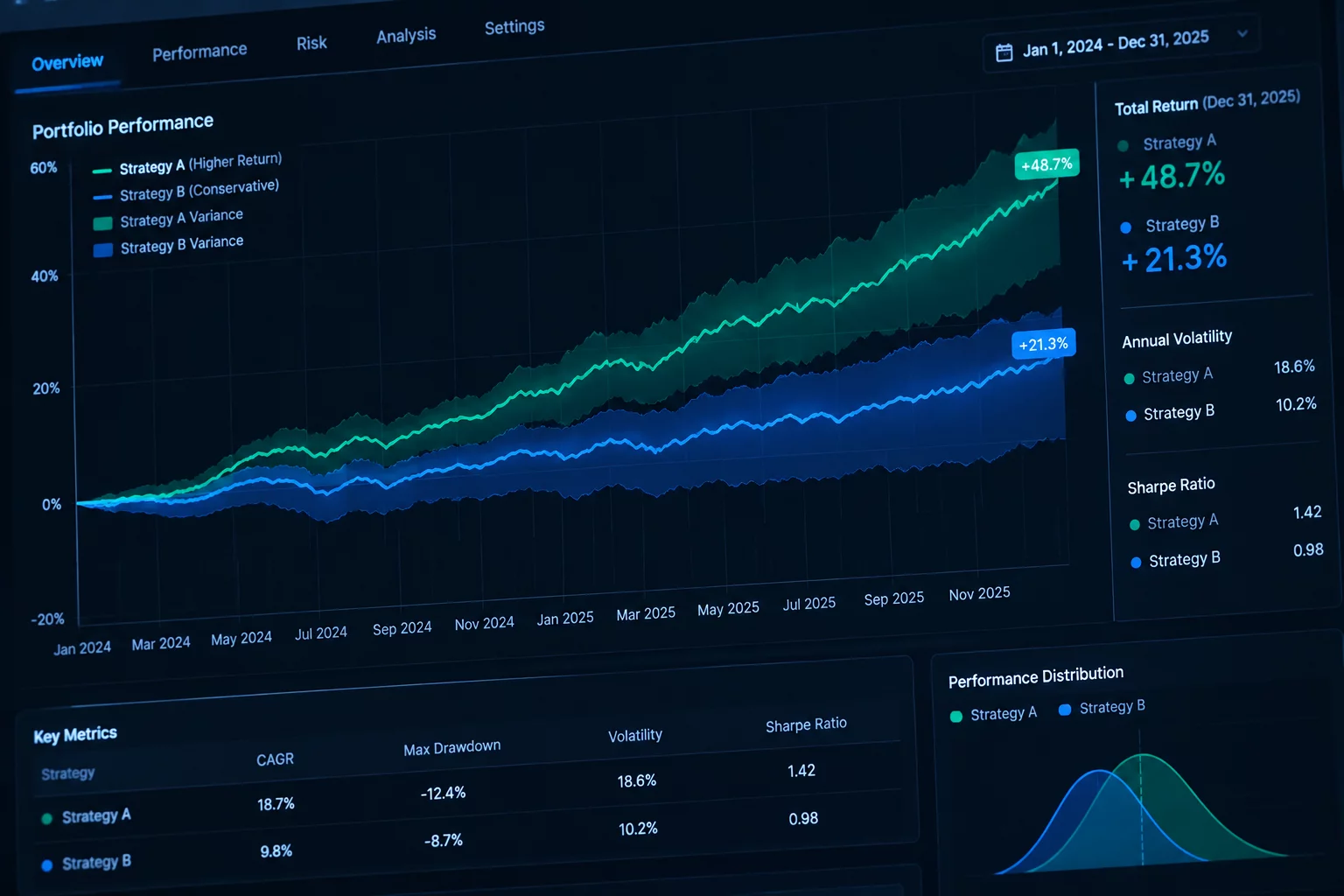
Diagnostic comparison between simulated order fill parameters and live limit order book latency.
Why simulated fill models distort strategy viability and how to measure the hidden slippage, queue priority drag, and liquidity deficits.
Retail paper trading simulators routinely generate an illusion of effortless liquidity. Most simulator matching engines operate under an idealized assumption: whenever the market price touches a designated limit price, your order fills instantaneously without delay or inventory friction.
In live trading venues, however, limit orders sit at the tail end of deep FIFO order queues. When volatility surges, market orders systematically exhaust available top-of-book depth, pushing fills through multiple price levels. The spread between simulated returns and actual production outcomes represents the friction deficit. Without accounting for queue positioning, spread widening, and venue routing latency, strategy backtests produce artificially high win rates that evaporate once real capital enters the book.
| Execution Dimension | Paper Engine Standard | Live Market Reality |
|---|---|---|
| Limit Order Queue Priority | Fills 100% volume upon first price touch | Strict FIFO Queue Decay |
| Bid-Ask Spread Traversals | Immediate midpoint or touch fill | Adverse Selection Drag |
| Volume & Size Absorption | Full block executed regardless of depth | Partial Fills & Book Sweep |
| Routing & Venue Latency | Instantaneous zero-millisecond processing | Exchange Colocation Lag |
The primary source of artificial edge in paper trading environments stems from passive limit fill assumptions. In a paper money engine, if a stock trades at 142.50 and your bid rests at 142.50, a print of a single share at that price instantly triggers your complete order fill. In real electronic markets, hundreds of thousands of shares may stand ahead of yours on exchange books. The price often touches your level, fills orders ahead in the queue, and reverses immediately, leaving your live order unexecuted.
Market orders suffer from the inverse distortion. Simulated engines frequently clear market orders directly at the prevailing National Best Bid and Offer (NBBO) quote displayed on the screen. In live execution, placing a market order during fast-moving market segments inevitably incurs positive or negative slippage due to network routing latency and internal broker routing pathways.
When analysts fail to adjust replay datasets for these microstructure facts, the resulting trade review logs reinforce destructive behavioral habits. Traders conclude that their entry timing was pristine when, in reality, their entire theoretical edge was subsidized by a simulator engine that does not adhere to financial market physics.
A trading model that cannot survive a 1.5-tick queue delay and half-spread penalty is not an edge; it is an artifact of sandbox convenience.
— Elena Rostova, Quantitative Execution Analyst
Most paper trading platforms simulate order execution without maintaining a private queue simulator for every user. Tracking live exchange Level 2 depth queues on historical tick data requires massive computational power, so platforms default to a simple trigger rule whenever the last traded price matches the order price.
Replay sheets should deduct at least half the prevailing bid-ask spread on every entry and exit. During macroeconomic releases or opening rotations, adding an additional one to two ticks of simulated slippage creates a realistic stress test for live order routing.
Yes. Even a delayed feed creates significant distortion if market participants evaluate trades based on real-time charts while the simulated simulator processes fills against 15-to-20-minute lagged quotes. Always ensure execution data matches the actual quote timestamps used during your analysis.
Apply realistic queue penalties and slippage factors before migrating systematic logic to live market venues.