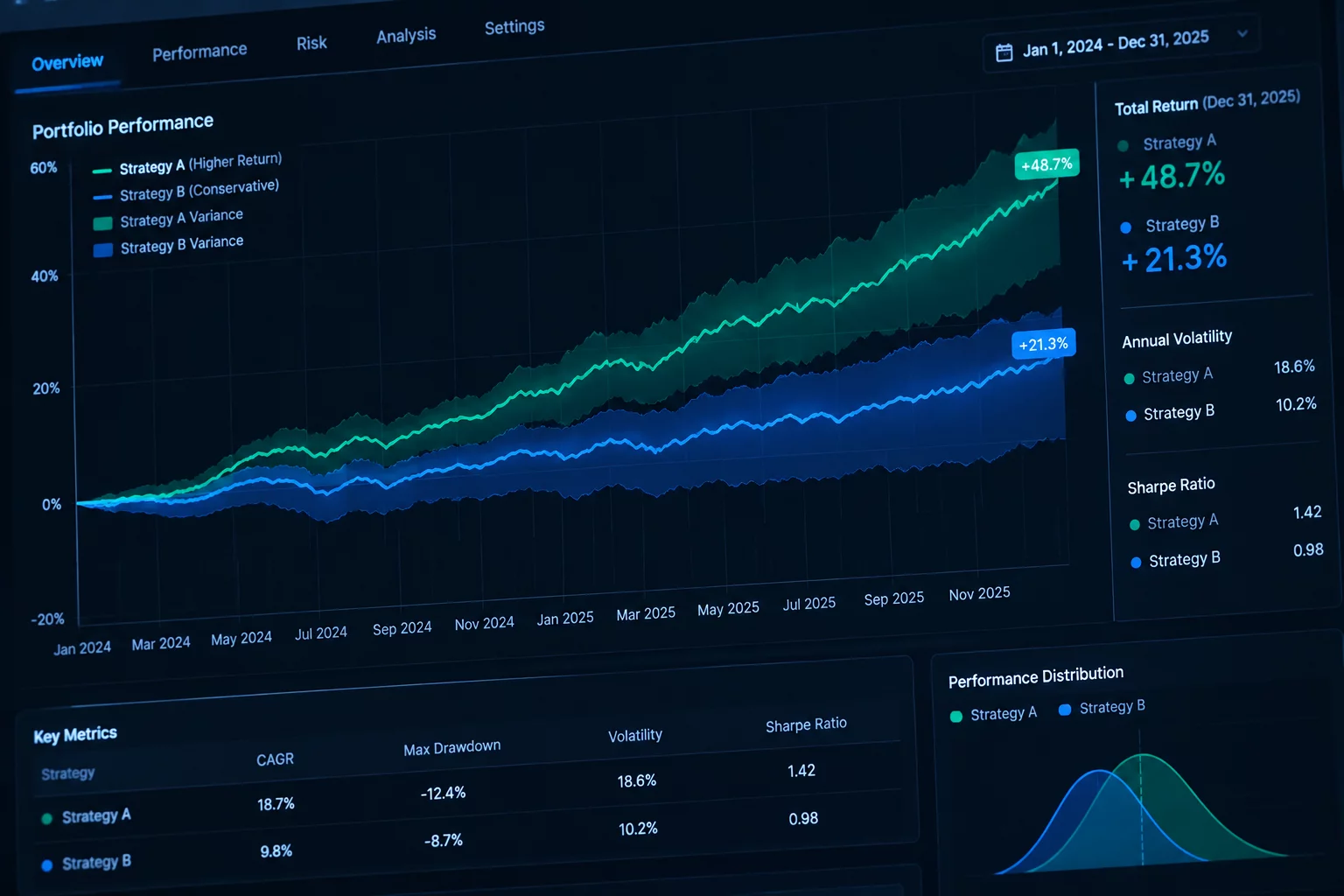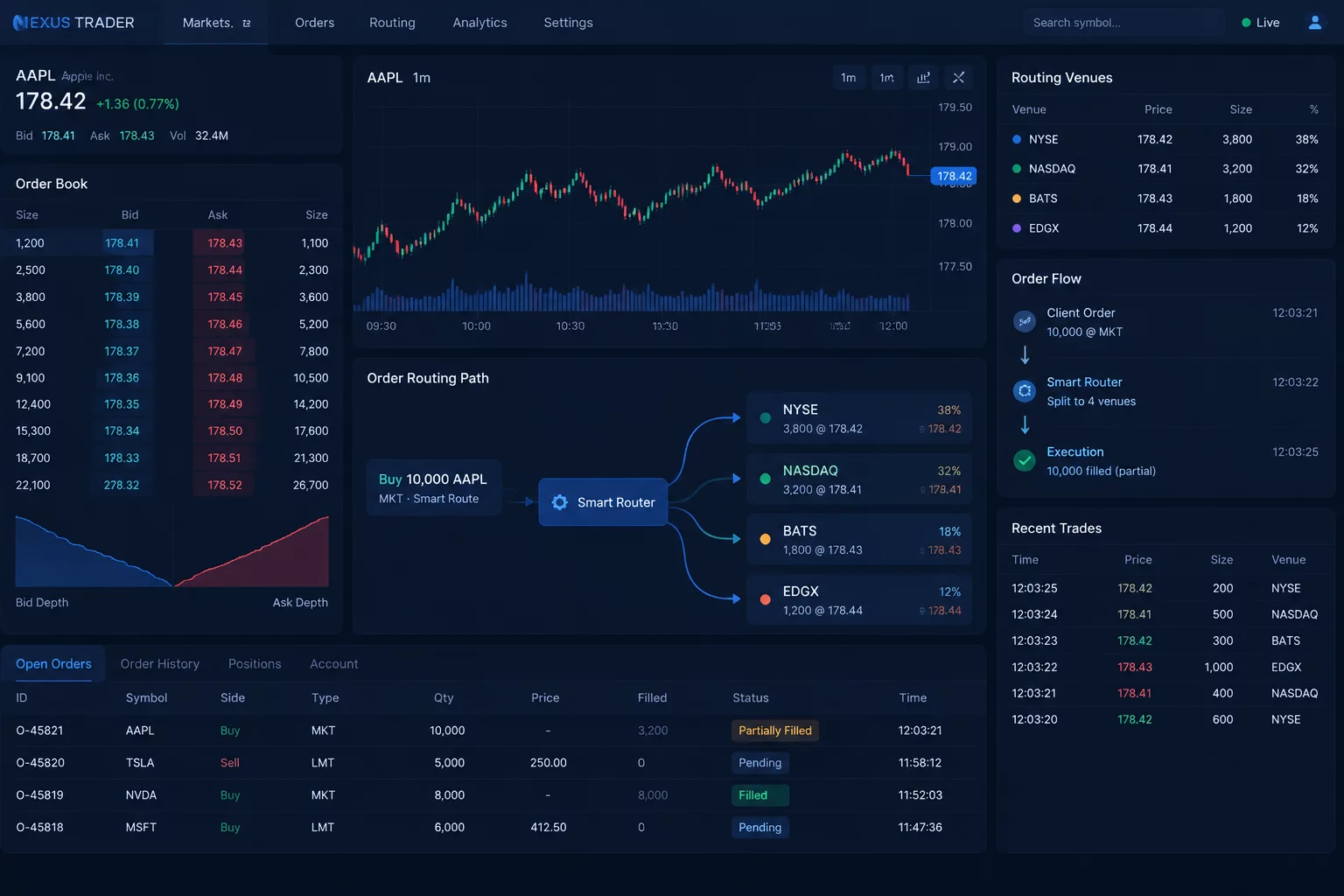
Visualizing order book queue seniority and price-time priority deviations inside simulated matching engines.
Understanding how paper trading engines simulate FIFO matching, queue seniority, and volume threshold triggers without true market friction.
Retail simulation platforms frequently grant instantaneous limit order executions as soon as the price prints on the consolidated tape, ignoring your real placement at the tail of the order queue.
In live equity and futures markets, placing a limit order at the bid or offer joins an existing queue governed by strict price-time priority (FIFO) or pro-rata allocation. Conversely, most paper accounts track only trade ticks: if a single share trades at your designated limit price, the simulator often credits you with an immediate 100% fill. This fundamental architectural shortcut introduces substantial fill rate bias, causing strategies relying on passive limit executions to appear profitable in the sandbox while failing decisively in live liquidity.
| Execution Dimension | Simulated Engine Model | Live Reality Discrepancy |
|---|---|---|
| Queue Priority Model | Instant fill upon single tick match at limit price | Severe Optimism Bias |
| Level 2 Depth Depletion | Size ignored; fills without exhausting resting contracts | Volume Distortion |
| Cancel / Replace Latency | Zero-latency local state change with no exchange round-trip | Artificial Speed |
| Adverse Selection | Fills occur symmetrically on winning and losing moves | Alpha Inflation |
When you route a limit order into an authentic exchange matching engine like NASDAQ's INET or CME's Globex, your resting order sits behind thousands of shares already committed at that exact price level. To receive an execution, incoming marketable orders must absorb every preceding share in the queue. Simulated environments sidestep this mechanical necessity by evaluating fills against the Consolidated Tape rather than managing an autonomous matching engine.
This discrepancy manifests most painfully through adverse selection. In live trading, you are most likely to receive a passive fill when aggressive institutional flow overpowers the book and sweeps right through your level—meaning the trade immediately trends against you. Conversely, when the market barely touches your level before reversing strongly in your intended direction, you are routinely left unfilled at the end of the queue. Simulators invert this dynamic by granting immediate fills on mere touches, artificially capturing tops and bottoms.
Applying these strict filters inside your post-trade replay sheets strips out phantom edge and brings paper performance metrics into close alignment with production exchange conditions.
If your trading edge relies on capturing the spread via passive limit orders in a simulated book, you aren't trading the market—you're trading the simulator's computational generosity.
— Marcus Vance, Quantitative Execution Analyst
Simulated paper environments typically execute orders using Last Traded Price (LTP) or consolidated NBBO crossing logic without maintaining a discrete queue simulator. If a trade executes at your price anywhere in the consolidated tape, the simulator automatically triggers a fill regardless of your theoretical queue position.
FIFO (First-In, First-Out) rewards speed, filling orders strictly in the chronological order they arrived at the exchange. Pro-Rata allocation, commonly used in Treasury and Short-Term Interest Rate futures, distributes fills proportionally according to the size of each participant's resting order. Neither structure is replicated by basic paper trading accounts.
Implement a strict self-imposed penetration rule in your Replay Sheet: only credit yourself with a fill if the market traded completely through your order price by at least one or two ticks, or if cumulative volume at that price exceeded total visible liquidity by at least 200%.
Explore our comprehensive analytical replay sheets and eliminate phantom paper gains.