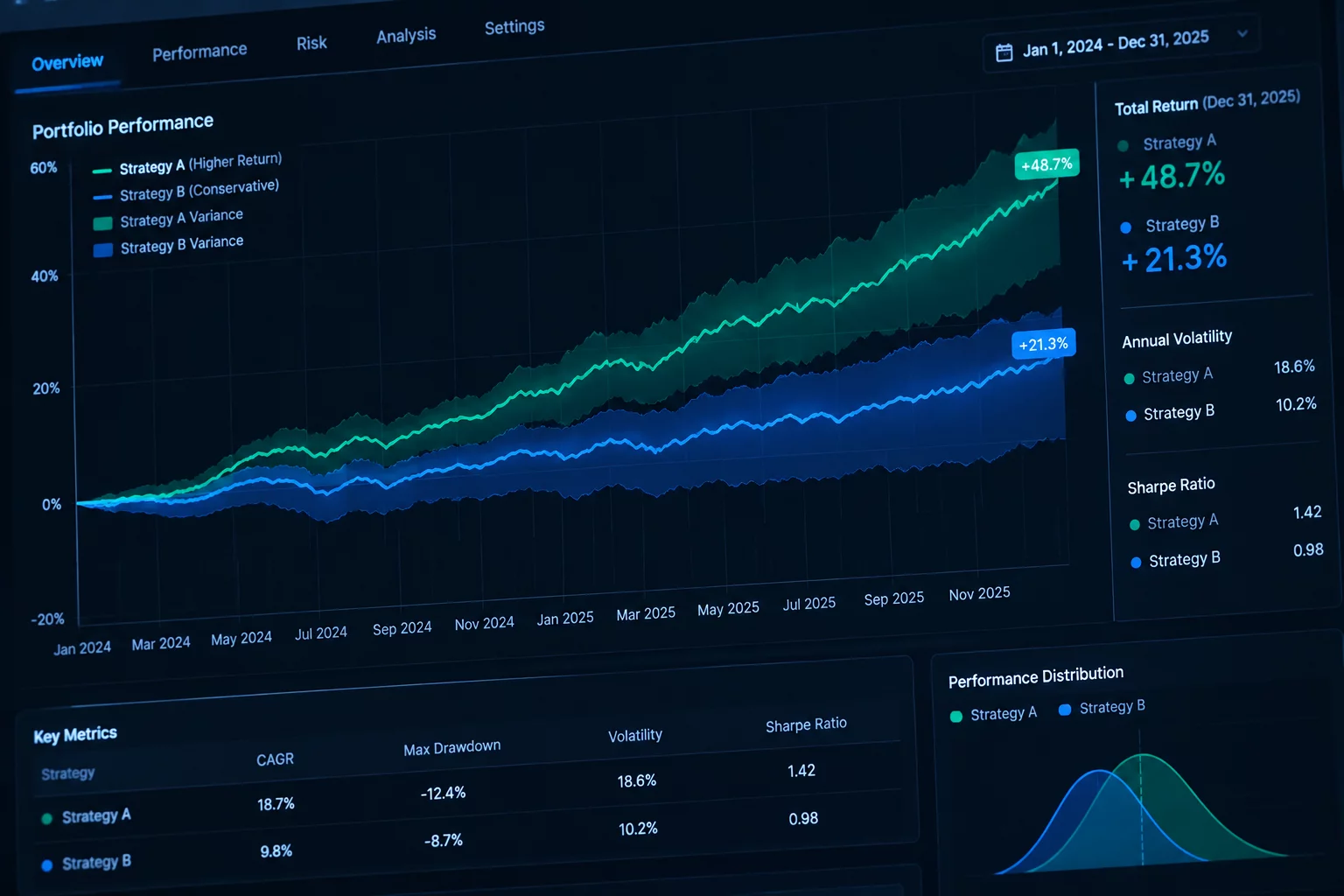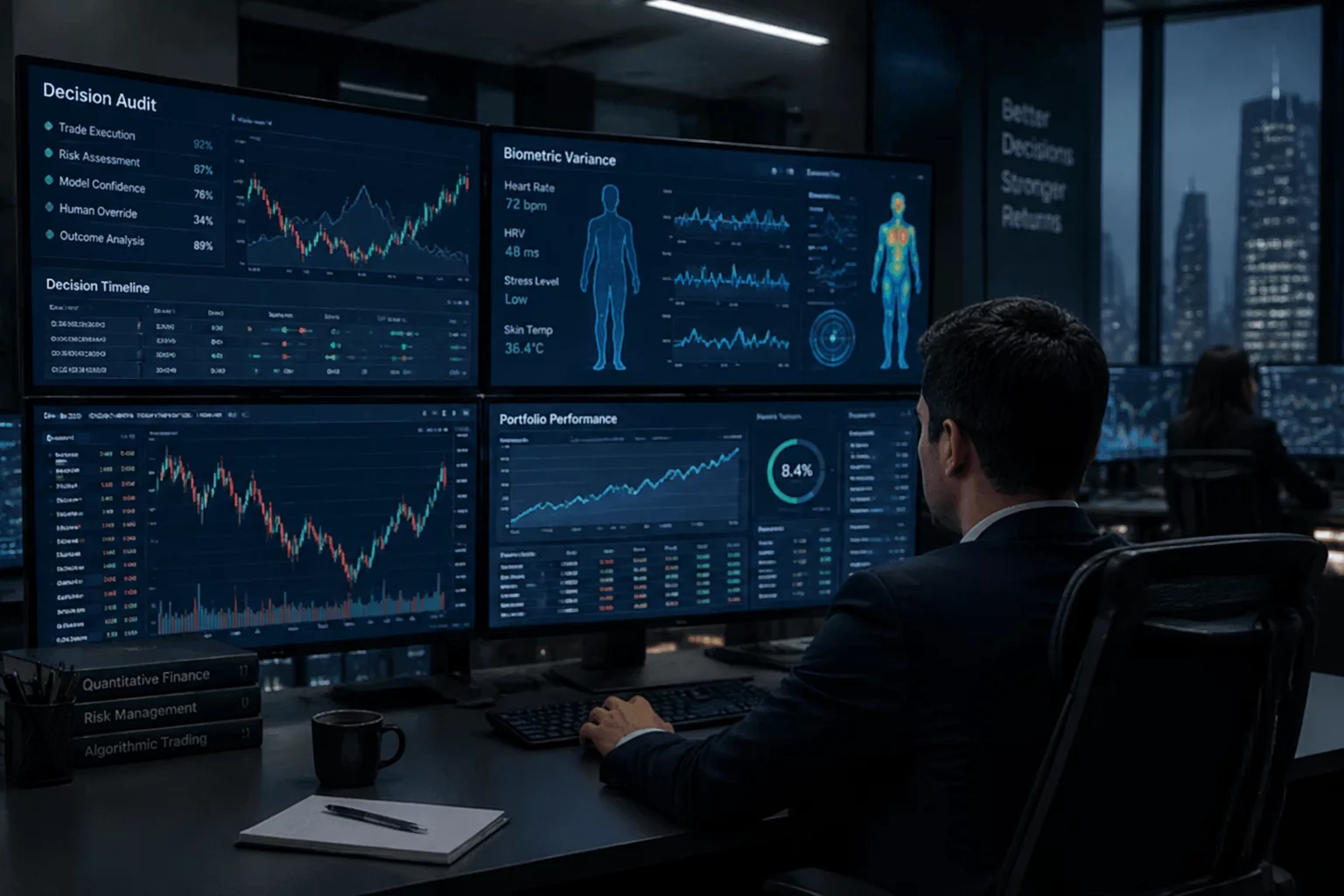
Multi-factor trade review console tracking emotional variance versus simulated capital performance.
How fictitious capital insulates operators from autonomic stress responses, alters execution discipline, and generates illusory consistency during simulation reviews.
Practicing in a riskless sandbox eliminates the autonomic nervous system responses that govern real capital allocation, systematically breeding false confidence and distorted risk metrics.
When capital loss carries zero existential consequence, operators naturally tolerate catastrophic drawdowns, hold losing positions past technical invalidation levels, and experience artificial tranquility through aggressive volatility. This psychological insulation—termed sandbox bias—masks foundational procedural flaws under the veneer of effortless profitability. Without structured behavioral friction deliberately introduced into replay analysis, the execution habits formed in paper environments inevitably disintegrate under real monetary pressure.
| Behavioral Dimension | Sandbox Default Habit | Live Parity Audit Protocol |
|---|---|---|
| Stop-Loss Adherence | Passive hope-holding during deep adverse excursions | Hard-Coded Bracket Mandate |
| Position Sizing | Over-leveraging based on arbitrary maximum equity limits | Scaled Live Equity Parity |
| Execution Hesitation | Instant entry without slippage or counterparty fear | 1.5x Spread Friction Penalty |
| Post-Mortem Logging | Ignoring scratch trades and recording only winning runs | Mandatory Replay Audit Log |
The fundamental disparity between simulated execution and live market participation lies in autonomic nervous system activation. In live environments, financial exposure triggers amygdala activation, elevating heart rate, narrowing perceptual focus, and releasing stress hormones. These physiological markers directly distort temporal perception, frequently inciting premature exits or catastrophic loss aversion. In a paper money environment, however, this neurochemical cascade remains completely dormant.
Traders operating inside paper platforms frequently interpret their calm demeanor as organic emotional discipline. In reality, tranquility without skin in the game is merely an artifact of consequence absence. This false calm fosters an accidental edge where wide stop-outs are endured comfortably simply because there is no visceral penalty. Once live liquidity is introduced, identical drawdown curves produce acute distress, destroying the execution consistency observed in paper trials.
Long-term mastery requires isolating the analytical premise from the artificial euphoria of paper gains. By enforcing strict pre-trade criteria and logging execution friction directly into standardized Replay Sheets, analysts systematically calibrate their decision architecture before confronting live market microstructure.
Paper trading does not test your emotional fortitude; it tests your mechanical hypothesis. Confusing the peace of a simulator with genuine risk tolerance is the swiftest path to live account liquidation.
— David Chen, Head of Quantitative Behavioral Audits
The divergence stems from two interconnected factors: lack of execution friction (such as queue latency, real bid-ask spread widening, and partial fills) and the psychological absence of loss aversion. In simulation, traders hold through pullbacks without panic; in live trading, identical drawdown levels trigger premature exits and erratic adjustments.
Absolute parity is impossible, but synthetic friction can be engineered. Reduce the simulated account size to exact live capital, penalize all market fills with double spread estimates, log every trade hypothesis prior to entry, and enforce mandatory timeout periods following rule violations.
Transition should occur only when an operator achieves 100 consecutive trades adhering flawlessly to entry criteria, risk rules, and audit logging—regardless of P&L. The goal of simulation is procedural discipline, not wealth accumulation.
Explore our library of structured case studies analyzing slippage gaps, order book queues, and behavioral failure modes.