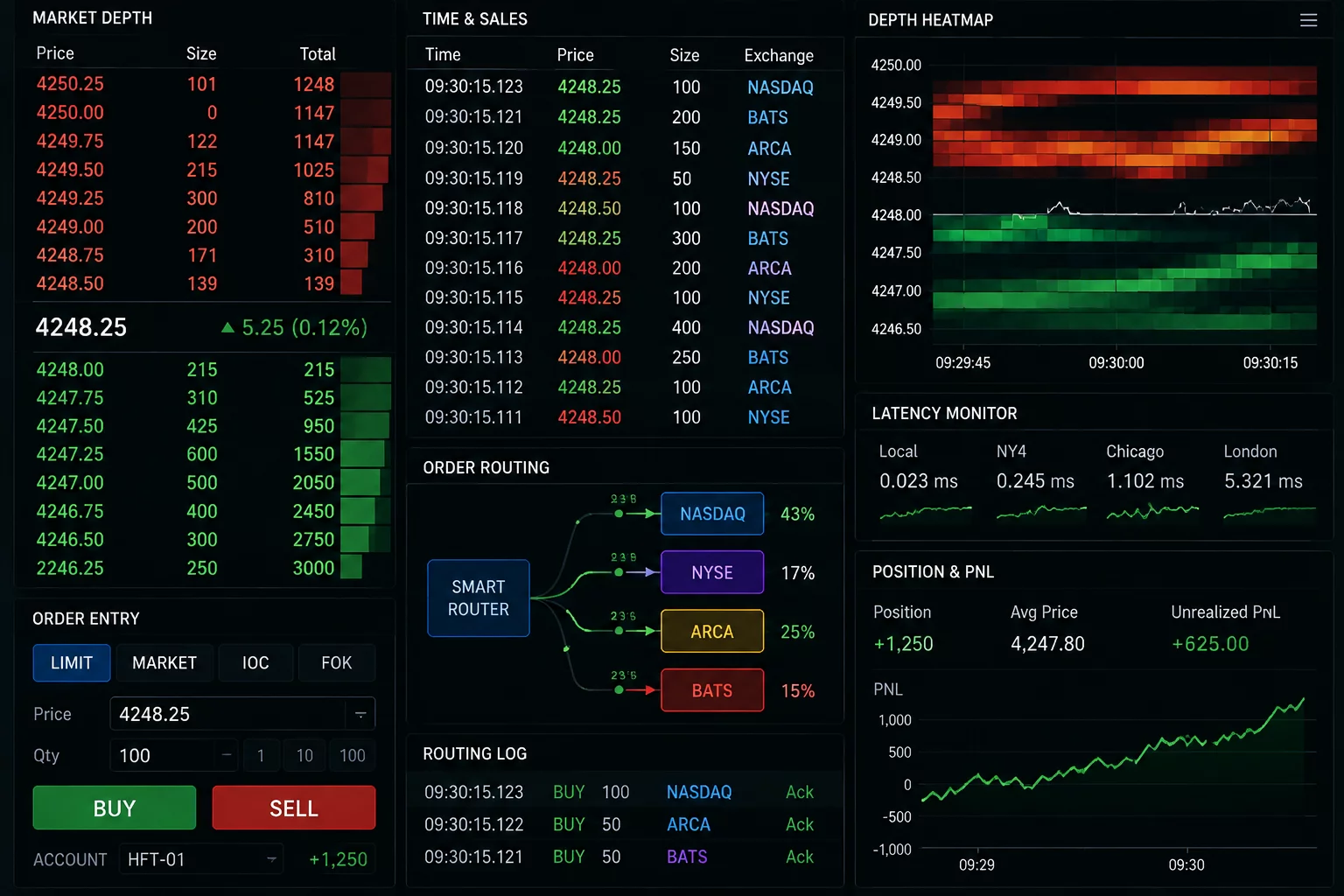
Decision audit workflow separating setup validity metrics from sandbox execution variance.
Establishing systematic forensic protocols to separate natural probabilistic drawdown from structural flaws in trade generation logic.
Traders operating inside simulated sandbox accounts frequently attribute every negative outcome to market randomness or paper fill anomalies, concealing fundamental flaws in their predictive framework.
Without objective forensic classification, discretionary paper traders misdiagnose strategic breakdown as temporary bad luck. Establishing clear audit parameters isolates statistical variance from structural invalidity before transitioning capital to live market environments.
| Audit Dimension | Baseline Diagnostic Criteria | Classification Rule |
|---|---|---|
| Setup Hygiene | Pre-entry checklist adherence, technical trigger alignment, and timeframe confluence | Binary Filter (Pass/Fail) |
| Liquidity Verification | Level 2 depth confirmation, tick volume density, and spread proportion under 0.08% | Execution Context |
| Adverse Excursion | Maximum adverse excursion (MAE) remaining within predetermined volatility bands | Variance Parameter |
| Premise Invalidation | Market structure violation prior to theoretical stop triggering | Core Flaw Trigger |
A rigorous post-mortem begins by auditing the entry hypothesis before inspecting the exit price. When an order fills in paperMoney or any sandbox environment, record the exact condition of the order book and the underlying rationale. If an outcome turns negative while every rule in the setup playbook was fulfilled cleanly, that loss belongs to expected statistical variance.
When an audit reveals that key criteria were compromised—such as chasing an extended candle, ignoring higher-timeframe order flow divergence, or accepting ambiguous volume—the loss stems from a flawed premise. Labeling flawed premises as bad luck prevents necessary strategy corrections and cultivates chronic sandbox overconfidence.
Tracking these classifications across twenty or more trades isolates recurring tactical vulnerabilities. Once traders stop conflating random distribution noise with setup degradation, simulation data yields actionable feedback.
Treating an undisciplined entry as a variance loss is the single quickest way to ensure that simulated profitability never survives live liquidity.
— Marcus Vance, Lead Execution Diagnostics Specialist
If the market conformed to your entry rules, respected liquidity parameters, and moved against your position without invalidating structural levels beforehand, it is statistical variance. If key setup criteria were ignored or violated prior to entry, it is a flawed premise.
Simulated engines fill limit orders as soon as price touches the quote, irrespective of queue priority or true depth. This creates artificial success that masks conceptual weaknesses unless orders are audited tick-by-tick.
A minimum cohort of thirty to fifty systematically executed setups provides the sample size required to separate noise from statistically significant model decay.
Explore detailed case studies of simulated slippage, queue mismatches, and execution diagnostics.